South Indian Style Medu Vada Recipe
If you are a fan of South Indian food, you must have heard of Medu Vada. It is a much-loved dish that wins hearts with its traditional taste and soft-crispy texture. It is served with hot sambhar and fresh coconut chutney, which makes it even more delicious. It is not just a snack but a special dish that reminds us of festivals and home meals.
Medu Vada’s round doughnut-like shape, crispy outside and soft inside texture make it special. You can have it for breakfast, brunch or evening snack. Whether you are making it for the first time or already know how to cook, here we tell you in an easy step-by-step way how to make Medu Vada – From how to prepare the batter to making the vada golden crisp Also know how to store and reheat it.
Experience the authentic flavors of South India with this traditional breakfast as we show you how to make crispy and perfectly golden Medu Vadas every single time!
What is Vada?
In Indian food culture, the word ‘vada’ is used for a variety of savory, fried snacks. They are usually made from lentils, chickpeas or flour and deep fried in oil. Each state has its own variation of vadas – like the Masala Vada from Tamil Nadu or the Batata Vada from Maharashtra.
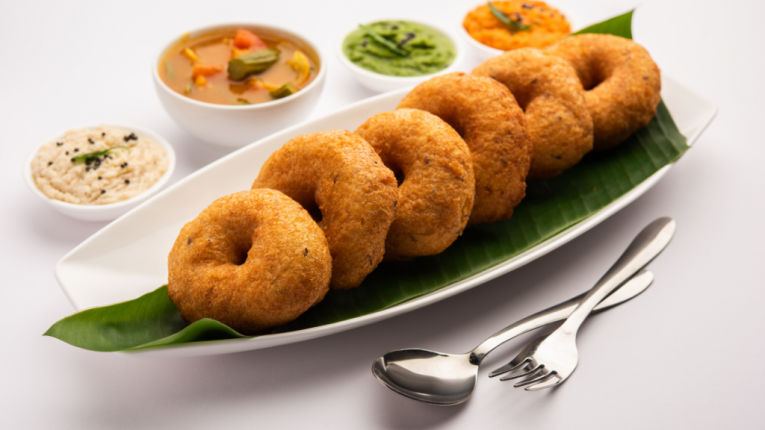
Medu Vada is among the most loved varieties, particularly cherished in South Indian cuisine. Prepared using urad dal, it has a circular, doughnut-style appearance with a tiny hole in the middle. Crispy on the outside and soft on the inside, this vada is packed with delicious flavor. It is usually served with hot sambhar and fresh coconut chutney and is a perfect dish to have during breakfast, festive occasions or with evening tea.
About Medu Vada Recipe
The word “medu” means “soft” in Tamil, which perfectly describes the charm of this vada – a crispy outer layer and a soft and airy inner layer. Medu Vada is not just a breakfast but an experience and a healthy one too which is often made during festivals, pujas and family breakfast. Its crunchy outer layer combined with a soft, fluffy center makes it incredibly delicious and satisfying to enjoy.
Medu vada is made from urad dal. The dal is first soaked and ground, then spices like black pepper, cumin, ginger and green chillies are added to it and then it is fried in hot oil. Fresh hot vada when eaten with spicy sambhar and coconut chutney, makes a perfect and flavourful meal.
Another special thing about this vada is that you can add a variety of flavours to it – like finely chopped onions, grated coconut or curry leaves. Medu Vada is not just limited to South India but is also eaten with great fondness in breakfast shops, street food stalls and cafes all across India. People of all ages love it because its taste is unique every time.
Ingredients for Crispy Medu Vada Recipe
Here is a simple list of ingredients you will need to make Medu Vada:
1 cup urad dal (washed black lentils)
1 tsp cumin seeds
1 tsp coarsely ground black pepper
1 tbsp finely chopped ginger
1-2 finely chopped green chilies
2 tbsp chopped curry leaves
Salt to taste
Oil for frying
Optional: You can also add finely chopped onions or grated coconut to enhance the taste.
How to Make Medu Vada (Step-by-Step Guide)
1. Soaking the dal
First of all, take 1 cup urad dal and wash it well and then soak it in water for 4-5 hours or overnight. This helps the dal become tender, making it easier to grind into a smooth batter.
2. Grinding the dal
Drain the soaked dal and grind it using minimal water to achieve a thick, smooth batter. The batter should be a little thick and smooth. If you have a wet grinder then use it, but a mixer grinder will also work.
3. Beating the batter
Now beat the prepared batter well for 5 to 7 minutes. Doing this fills the batter with air and the vadas become light and fluffy while frying.
4. Adding spices
Add salt to the whipped batter according to your taste preference. Apart from this, add cumin seeds, coarsely ground black pepper, finely chopped ginger, green chillies and curry leaves. If you want, you can also add finely chopped onions or grated coconut – this will enhance the taste.
5. Forming the vadas
Moisten your hands with a little water so that the mixture does not stick. Then take a little batter, shape it into a round ball, press it a little and make a hole in the centre with your finger. If you find it difficult to form it with your hands, you can form the vadas on a banana leaf or plastic sheet and gently drop them in the oil.
6. Frying the vadas
Heat enough oil in a pan. Now gently shape the vadas and carefully drop them into the hot oil. Fry the vadas on a medium flame till they turn golden and crispy on all sides.
Tip:
Vadas taste best when eaten hot. Serve these vadas alongside sambar and coconut chutney – a classic and perfect South Indian breakfast combo!
Vada Sambar Recipe (Quick Overview)
Ingredients for Sambar Recipe:
1/2 cup toor dal (pigeon pea lentils)
1 to 2 tablespoons of tamarind pulp, adjustable as per your taste preference.
1 to 2 tbsp sambhar powder
1 to 1.5 cups chopped vegetables, like carrot, drumstick, pumpkin, ladyfinger or any vegetable you like
1 tsp rai (mustard seeds)
A pinch of asafoetida (asafoetida)
Few curry leaves
Salt to taste
1 to 2 tsp oil for tempering
How to make Sambar
Cooking the lentils:
- Wash 1/2 cup toor dal thoroughly.
- Add 2 cups of water and cook in a pressure cooker till 3-4 whistles.
- Once the lentils are cooked, mash them thoroughly and set them aside.
Preparing the Tadka:
- Heat 1-2 teaspoons of oil in a pan.
- Add 1 teaspoon of mustard seeds to it.
- As soon as the mustard seeds begin to pop, add a pinch of hing and a few curry leaves.
- Once the tempering releases its aroma, move on to the next step.
Cooking the vegetables:
- Now add your choice of chopped vegetables to the pan, such as carrots, okra, drumsticks, pumpkin, or any others you prefer.
- Lightly fry them for 2-3 minutes.
Adding spices:
- Stir in 1 to 2 tablespoons of tamarind pulp into the vegetables.
- Then add 1-2 tablespoons of sambar powder and salt as per taste.
- Add 1 cup water and cook on low flame till the vegetables become soft completely.
Mixing the dal:
- Once the vegetables are soft, pour in the cooked and mashed dal and mix it with the rest of the ingredients.
- Mix everything well, and if required, add a little more water to get the desired consistency.
Simmering:
- Now boil the sambar on medium flame for 5-7 minutes so that all the flavours blend well.
Serving:
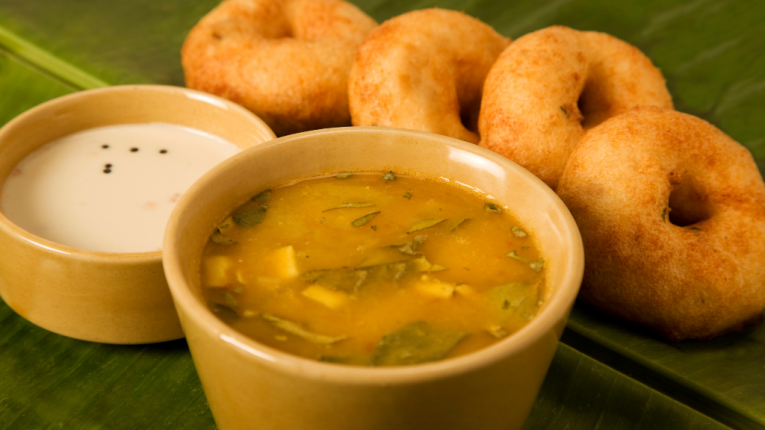
- Pair the hot sambar with crispy medu vadas, fluffy idlis, or steamed rice for a comforting meal.
Serving Suggestions
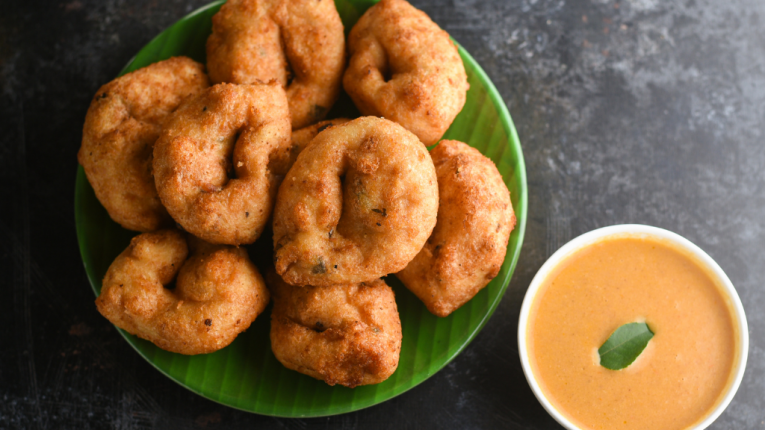
Medu Vada tastes best when eaten hot. You can serve it with:
- Fresh coconut chutney
- Spicy and tangy sambhar
- A steaming cup of freshly brewed filter coffee or spiced masala tea.
If you want to try something new, you can also eat Medu Vada as a chaat with curd and various chutneys – it tastes delicious too!
Tips for Making Perfect Medu Vada
For a smooth batter:
Use chilled water while grinding the lentils to get a finer, smoother batter texture.
Checking the oil temperature:
To check if the oil is hot enough for frying, drop a small portion of the batter into it. If it sizzles and floats slowly with a golden brown colour, the oil is fully heated and the vadas are ready to be fried.
For ease of making the vadas:
Slightly moisten your hands with water to make shaping the vadas easier. This prevents the batter from sticking and helps you shape them neatly.
Final Thoughts
This crispy Indian snack is not just a dish but a part of a special feeling and tradition in South Indian homes. Whether you call it Vada, Medu Vada or Ulundu Vadai – it has been a favourite everywhere.
Now that you have learnt how to make Medu Vada, try it this weekend and bring the real taste of South India to your platter.
FAQ
1. Can I make vada batter without a wet grinder?
Yes, absolutely!
If you don’t have a wet grinder, you can use a mixer grinder or a blender. Just make sure the batter is thick and has air in it so that the vadas turn out soft and fluffy.
2. How to keep vada crispy for a long time?
After frying the vadas, place them on a kitchen towel or tissue paper to drain out the excess oil. Never cover hot vadas, else they will turn soggy. They taste best when you serve them immediately.
3. How to reheat and crisp vada?
If the vada has cooled down, place it in an air fryer or oven at 180°C for 5 to 6 minutes to re-crisp them. This will make them hot and crispy again.
4. Why did my vada absorb too much oil?
The batter should be thick and drop slowly from a spoon for best results.
5. Why is the vada becoming hard?
If the batter is over-beaten or the lentils aren’t soaked long enough, the vadas can turn out hard. Whisk the batter only until it becomes light and slightly airy.
6. Why is my vada uncooked from inside?
When the oil is too hot, the vada browns quickly on the outside but stays raw inside. To ensure even cooking, always fry vadas on medium heat.